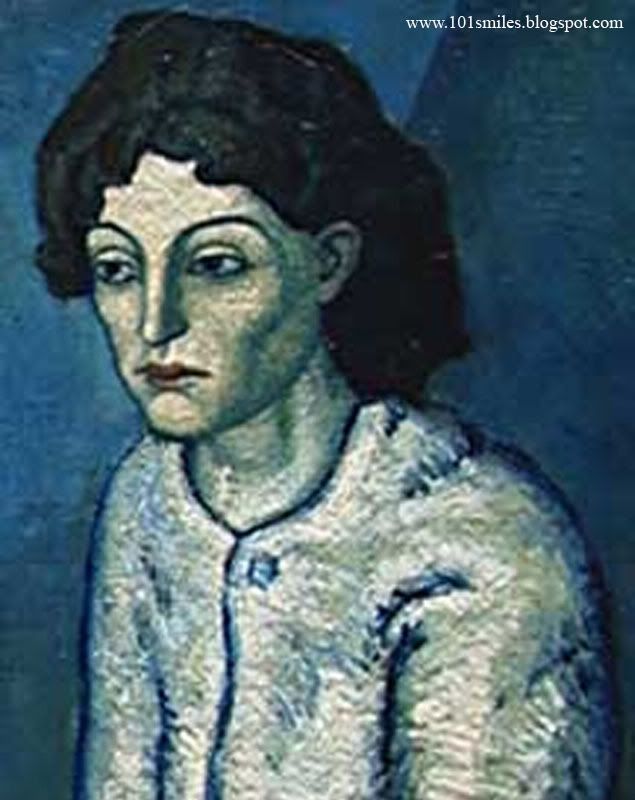
Pablo Picasso
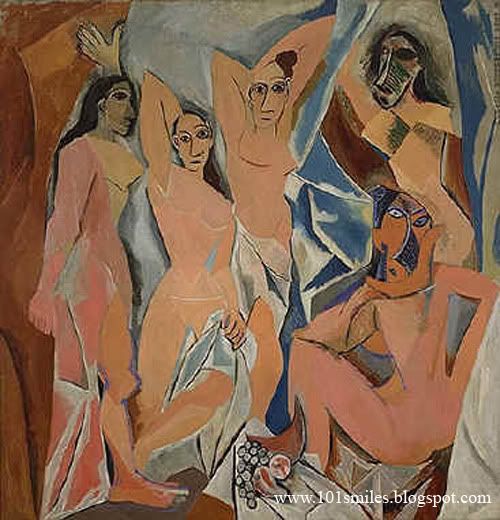
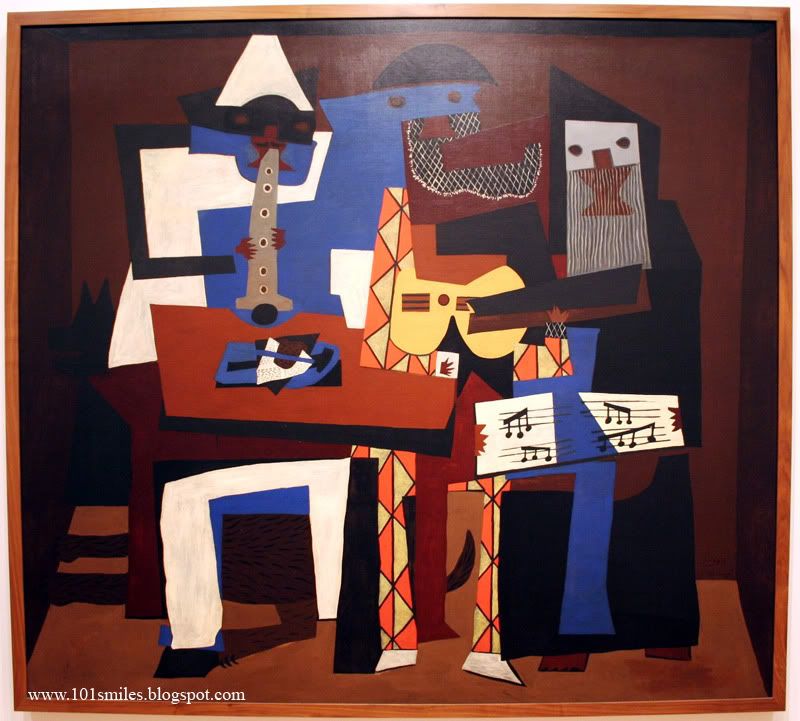
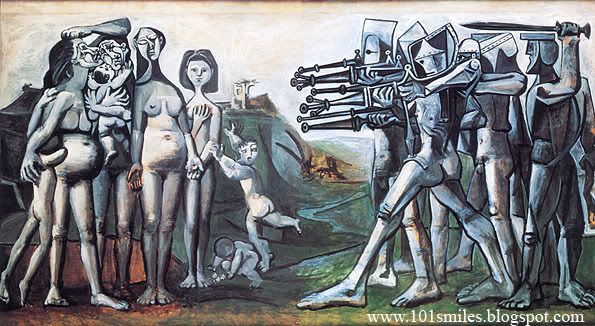
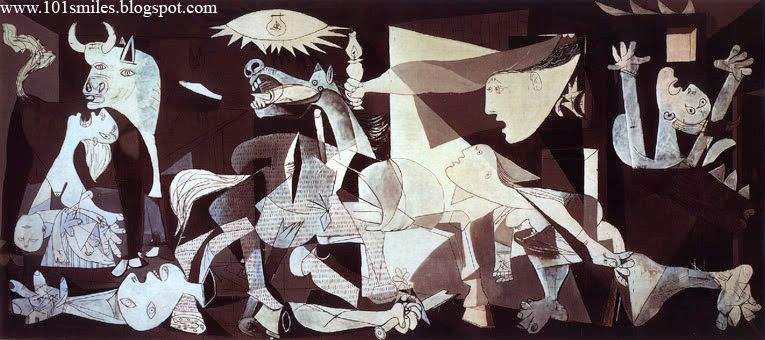
Pablo Diego José Francisco de Paula Juan Nepomuceno María de los Remedios Cipriano de la Santísima Trinidad Ruiz y Picasso (25 October 1881 – 8 April 1973) was a Spanish painter and Sculptor. He is one of the most recognized figures in 20th-century . He is best known for co-founding the Cubist movement and for the wide variety of styles embodied in his work. Among his most famous works are the proto-Cubist Les Demoiselles d'Avignon (1907) and Guernica (1937), his portrayal of the German bombing of Guernica during the Spanish civil war
Picasso life
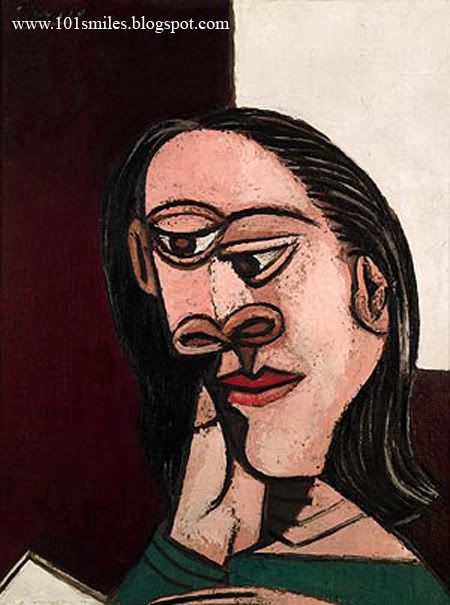
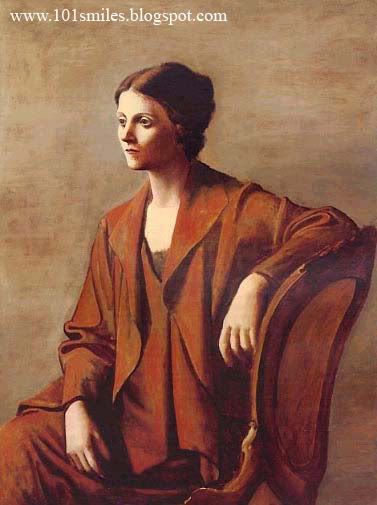
Picasso demonstrated uncanny artistic talent in his early years, painting in a realistic manner through his childhood and adolescence; during the first decade of the twentieth century his style changed as he experimented with different theories, techniques, and ideas. Picasso’s creativity manifested itself in numerous mediums, including painting, sculpture, drawing, and architecture. His revolutionary artistic accomplishments brought him universal renown and immense fortunes throughout his life, making him the best-known figure in twentieth century art.
Picasso was baptized Pablo Diego José Francisco de Paula Juan Nepomuceno María de los Remedios Crispiniano de la Santísima Trinidad, a series of names honouring various saints and relatives.[2] Added to these were Ruiz and Picasso, for his father and mother, respectively, as per Spanish custom. Born in the city of Málaga in the Andalusian region of Spain, he was the first child of Don José Ruiz y Blasco (1838–1913) and María Picasso y López.[3] Picasso’s family was middle-class; his father was also a painter who specialized in naturalistic depictions of birds and other game. For most of his life Ruiz was a professor of art at the School of Crafts and a curator of a local museum. Ruiz’s ancestors were minor aristocrats.
From the age of seven, Picasso received formal artistic training from his father in figure drawing and oil painting.The family moved to La Coruña in 1891 where his father became a professor at the School of Fine Arts. They stayed almost four years. On one occasion the father found his son painting over his unfinished sketch of a pigeon. Observing the precision of his son’s technique, Ruiz felt that the thirteen-year-old Picasso had surpassed him, and vowed to give up painting
In 1895, Picasso's seven-year old sister, Conchita, died of diphtheria—a traumatic event in his life After her death, the family moved to Barcelona, with Ruiz transferring to its School of Fine Arts. Picasso thrived in the city, regarding it in times of sadness or nostalgia as his true homeRuiz persuaded the officials at the academy to allow his son to take an entrance exam for the advanced class. This process often took students a month, but Picasso completed it in a week, and the impressed jury admitted Picasso, who was 13. The student lacked discipline but made friendships that would affect him in later life. His father rented him a small room close to home so Picasso could work alone, yet Ruiz checked up on him numerous times a day, judging his son’s drawings. The two argued frequently.
Picasso’s father and uncle decided to send the young artist to Madrid’s Royal Academy of San Fernando, the country's foremost art schoolIn 1897, Picasso, age 16, set off for the first time on his own, but he disliked formal instruction and quit attending classes soon after enrollment. Madrid, however, held many other attractions: the Prado housed paintings by the venerable Diego Velázquez, Francisco Goya, and Francisco Zurbarán. Picasso especially admired the works of El Greco; their elements, the elongated limbs, arresting colors, and mystical visages, are echoed in Picasso’s œuvre.
Portrait of Gertrude Stein, 1906, Metropolitan Museum of Art, New York City. When someone commented that Stein did not look like her portrait, Picasso replied, "She will"
After studying art in Madrid, Picasso made his first trip to Paris in 1900, then the art capital of Europe.There, he met his first Parisian friend, the journalist and poet Max Jacob, who helped Picasso learn the language and its literature. Soon they shared an apartment; Max slept at night while Picasso slept during the day and worked at night. These were times of severe poverty, cold, and desperation. Much of his work was burned to keep the small room warm. During the first five months of 1901, Picasso lived in Madrid, where he and his anarchist friend Francisco de Asís Soler founded the magazine Arte Joven (Young Art), which published five issues. Soler solicited articles and Picasso illustrated the journal, mostly contributing grim cartoons depicting and sympathizing with the state of the poor. The first issue was published on 31 March 1901, by which time the artist had started to sign his work simply Picasso, while before he had signed Pablo Ruiz y Picasso
By 1905 Picasso became a favorite of the American art collectors Leo and Gertrude Stein. Their older brother Michael Stein and his wife Sarah also became collectors of his work. Picasso painted portraits of both Gertrude Stein and her nephew Allan SteinGertrude Stein became Picasso's principal patron, acquiring his drawings and paintings and exhibiting them in her informal Salon at her home in Paris soonly picasso becomes famoushe has amazing collections of paintings


 His death
Pablo Picasso died on 8 April 1973 in Mougins, France, while he and his wife Jacqueline entertained friends for dinner. His final words were “Drink to me, drink to my health, you know I can’t drink any more.” He was interred at the Chateau of Vauvenargues near Aix-en-Provence, a property he had acquired in 1958 and occupied with Jacqueline between 1959 and 1962. Jacqueline Roque prevented his children Claude and Paloma from attending the funeral.Devastated and lonely after the death of Picasso, Jacqueline Roque took her own life by gunshot in 1986 when she was 60 years old.



 tomorrow i will explain about each and every ice hotel details